

TPI Thixomolding Process: Advanced Magnesium Alloy Die Casting Technology
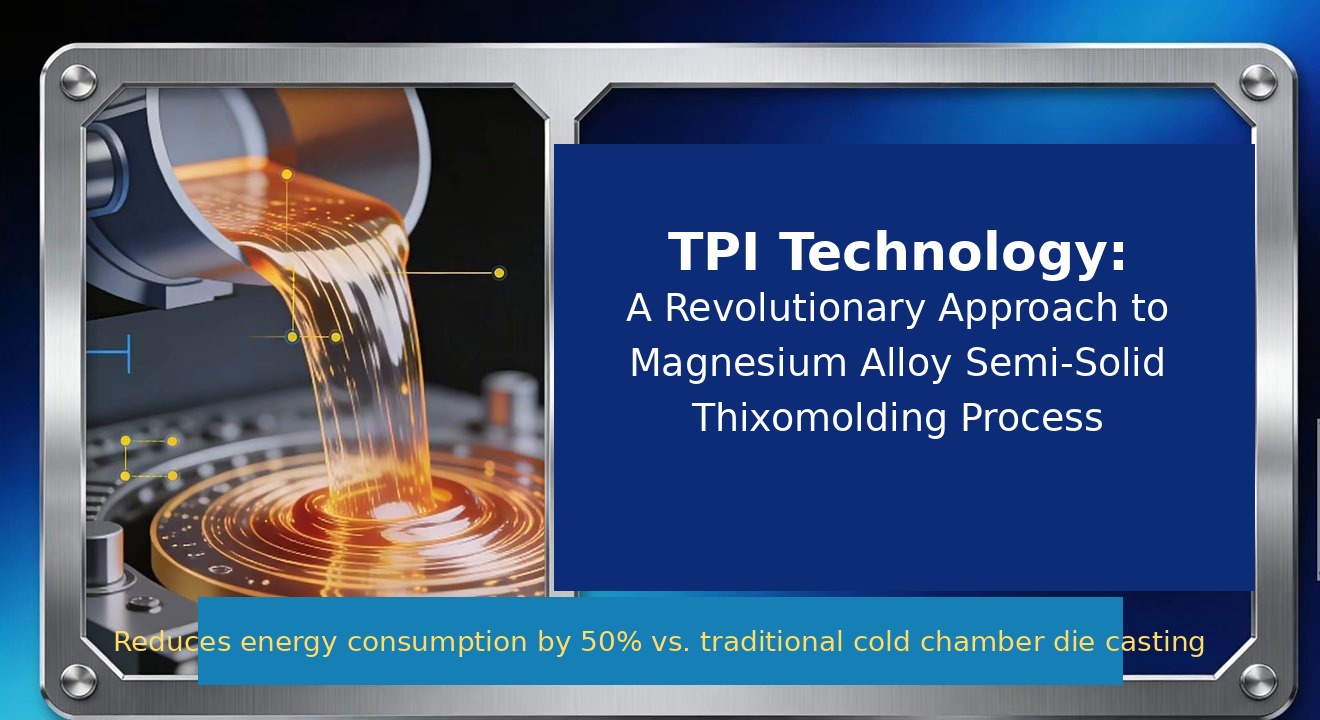
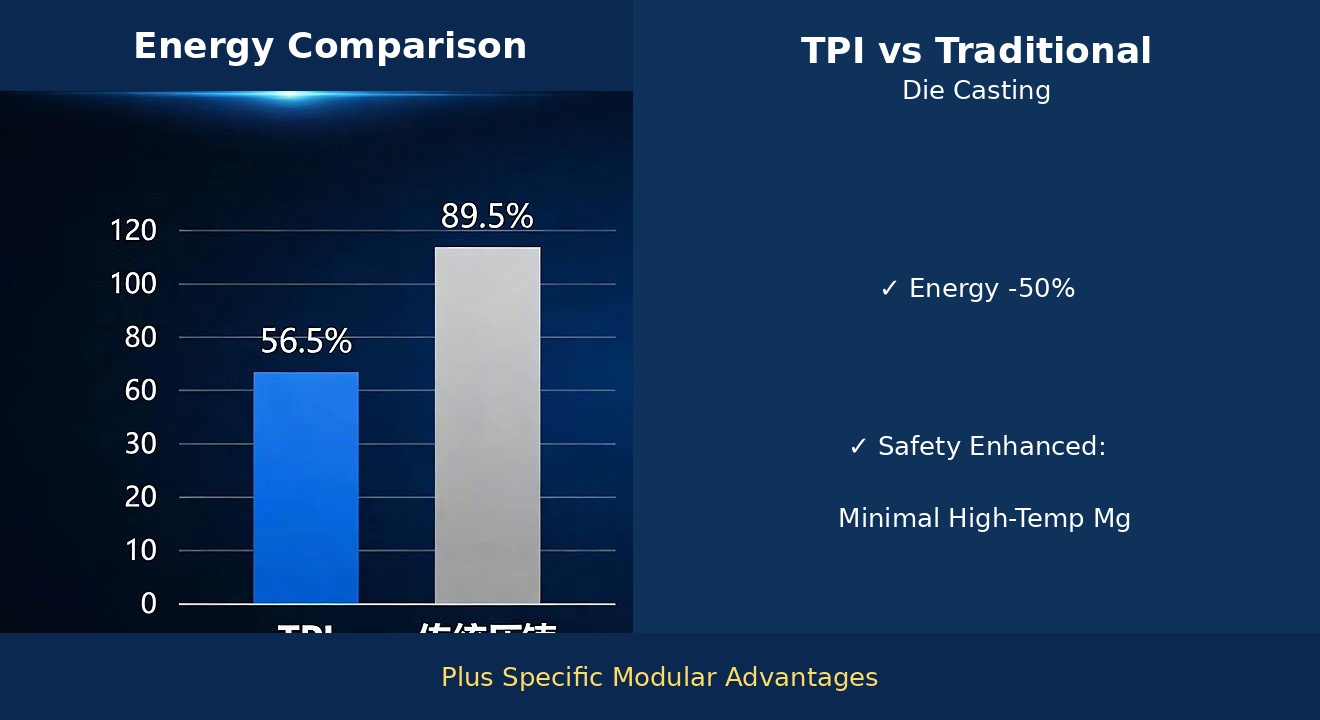
Thixomolding represents a paradigm shift in magnesium alloy processing, combining the advantages of hot-chamber die casting with semi-solid metal forming. This advanced process eliminates traditional melt handling risks while delivering superior mechanical properties and dimensional accuracy.
Process Fundamentals
Unlike conventional hot-chamber die casting where molten magnesium is held in a furnace, thixomolding uses solid magnesium alloy granules fed directly into a heated barrel. The material is heated to a semi-solid state (approximately 580-620°C for AZ91D) where it exhibits thixotropic behavior—viscous at rest but fluid under shear stress.
Key Technical Advantages
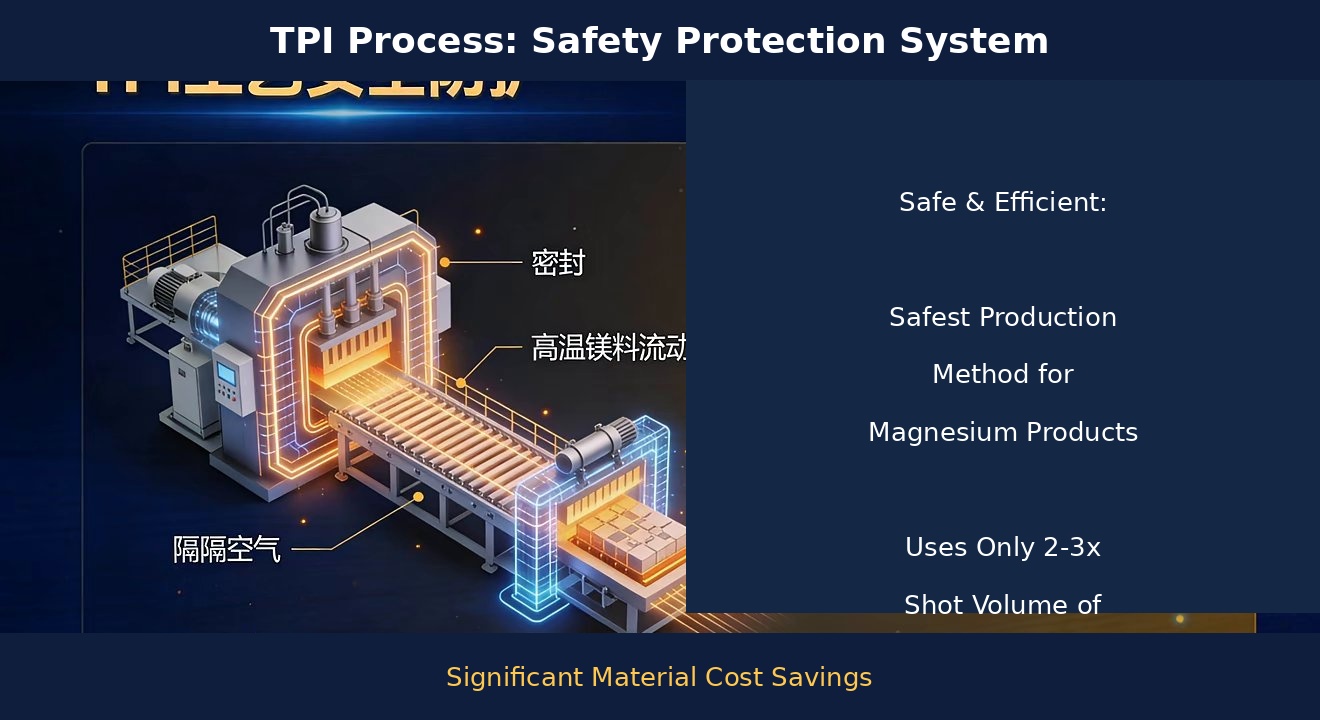
- Safety: No molten metal exposure eliminates fire and explosion hazards associated with magnesium melting
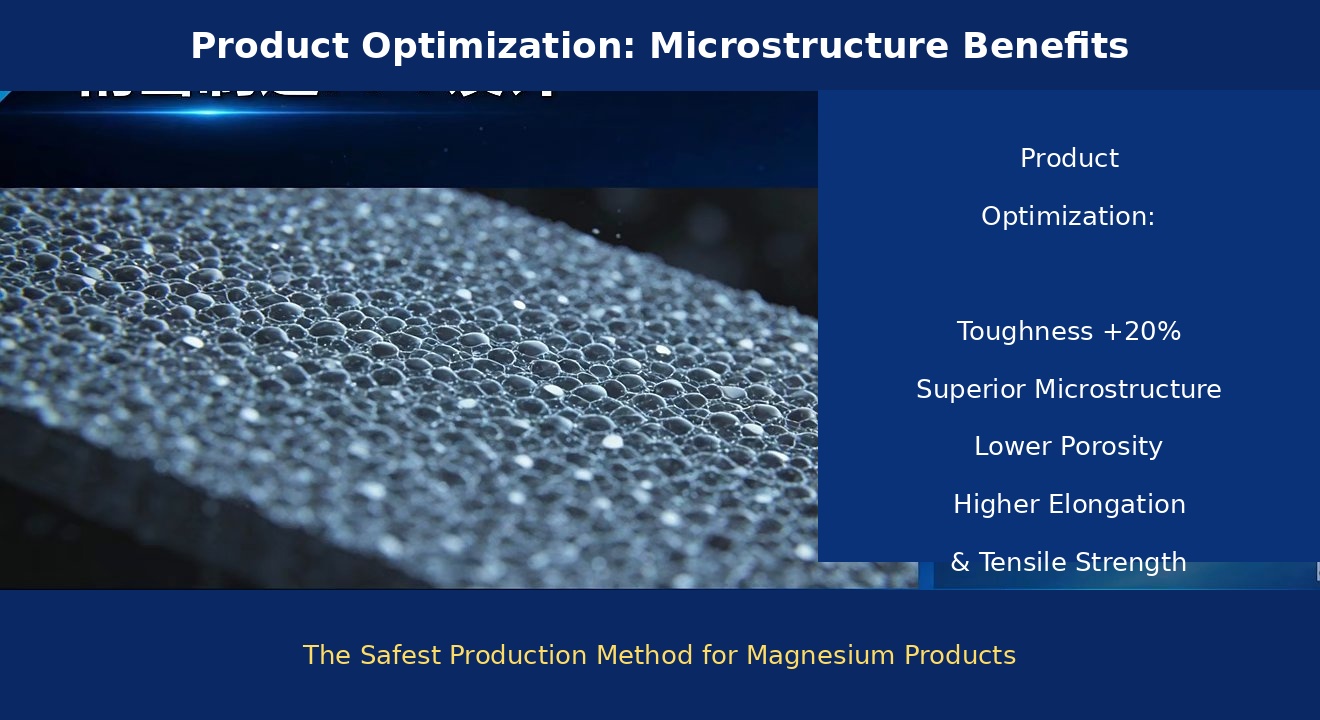
- Microstructure Control: Semi-solid processing produces fine, non-dendritic grain structure (typically 50-100 μm)
- Reduced Porosity: Lower injection turbulence minimizes gas entrapment compared to conventional die casting
- Dimensional Accuracy: Reduced shrinkage (approximately 0.4-0.5%) enables tighter tolerances
Process Parameters
| Parameter | Typical Range | Impact |
|---|---|---|
| Barrel Temperature | 580-630°C | Controls solid fraction (40-60%) |
| Screw Rotation Speed | 50-150 rpm | Determines shear rate and grain refinement |
| Injection Velocity | 2-6 m/s | Affects filling pattern and surface finish |
| Mold Temperature | 150-250°C | Influences solidification rate and microstructure |
Material Compatibility
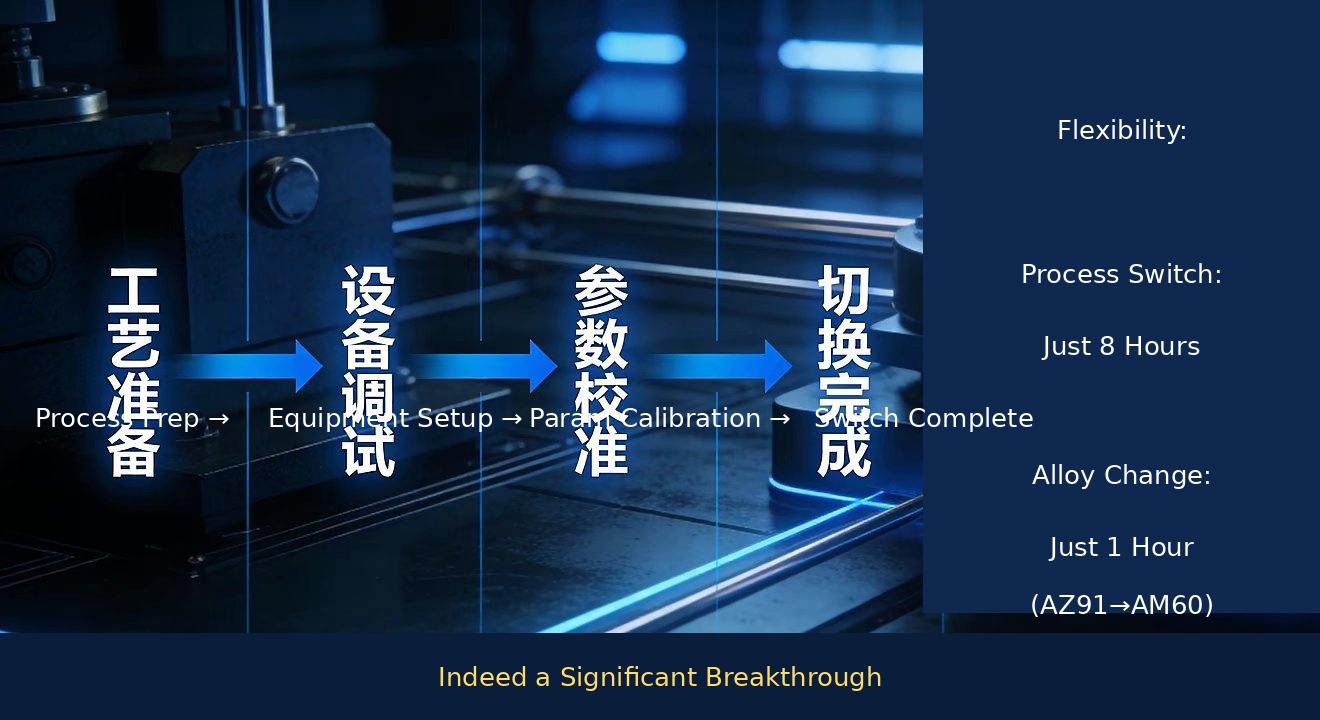
Thixomolding is compatible with standard magnesium die casting alloys:
- AZ91D: Most widely used, excellent castability and corrosion resistance
- AM60B: Superior elongation and impact strength for automotive safety components
- AS41B: Enhanced creep resistance for elevated temperature applications
- AJ62A: Advanced alloy with improved high-temperature performance
Application Areas
- Automotive: Steering components, seat frames, transmission housings
- Electronics: Laptop housings, camera bodies, heat sinks
- Power Tools: Housings and structural components requiring lightweight construction
- Aerospace: Non-critical structural components with high strength-to-weight requirements
Conclusion
TPI thixomolding technology offers a compelling alternative to conventional magnesium die casting, particularly for applications demanding superior mechanical properties, tight tolerances, and enhanced production safety. X-DIECASTING TECH provides comprehensive support for thixomolding process optimization, including material selection, mold design consultation, and quality control protocols.
For technical consultation on die casting mold manufacturing, consumables, and peripheral equipment, please contact [email protected]
Note: Portions of the technical insights in this article are derived from relevant articles and videos available online.