In high-pressure die casting operations, engineers frequently encounter a frustrating paradox: all machine parameters (injection speed, pressure, intensification) are dialed in, yet defect rates remain stubbornly high. Release-agent spray conditions are an important check when investigating surface defects, gas-related defects and distortion. However, these defects can involve multiple factors, including shot parameters, metal condition, die temperature, venting and part geometry, so spray conditions should not be treated as the sole root cause. This article breaks down the 5 critical spray pitfalls and outlines practical countermeasures aligned with stringent Japanese quality standards.
1. Typical Defects Caused by Release Agent Spraying
Die casting plants frequently report a frustrating situation: injection pressure, injection speed, and intensification pressure are all set to their nominal values, yet the defect rate refuses to come down. When asked about the root cause, most shops overlook the most common culprit — release agent (die casting coating / mold spray) management.
Release agents are often dismissed as “just something that helps the casting come out of the die.” In reality, every small variation in spray volume, coating thickness uniformity, residue left on the mold surface, and blow-off (air drying) cleanliness generates persistent quality defects. Under-spraying, over-spraying, uneven coverage, residue and insufficient blow-off are important checks when investigating surface, gas-related and distortion defects. However, defect causes are often multi-factorial, so spray conditions should be evaluated together with shot parameters, metal condition, die temperature, venting and part geometry.
Mistake ① Under-spraying → Incomplete Protective Film
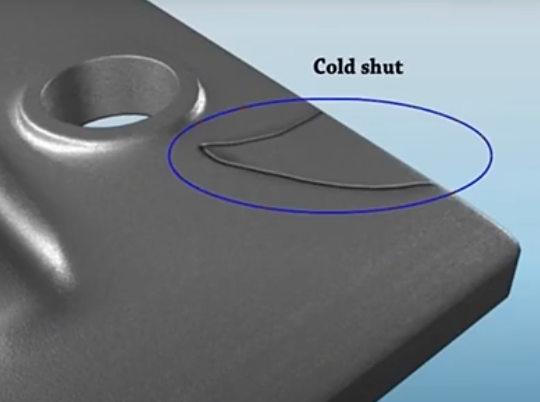
When the die cavity surface is not covered with a uniform release film, the fast-filling molten aluminum comes into direct contact with the hot die wall. The results include cold shuts and flow marks on the surface, heat checks (fine surface cracks), die soldering / sidewall scoring due to insufficient lubrication, short fills at corners, and significantly increased grinding/finishing work.
Mistake ② Over-spraying → Gas Defects from Vaporized Moisture
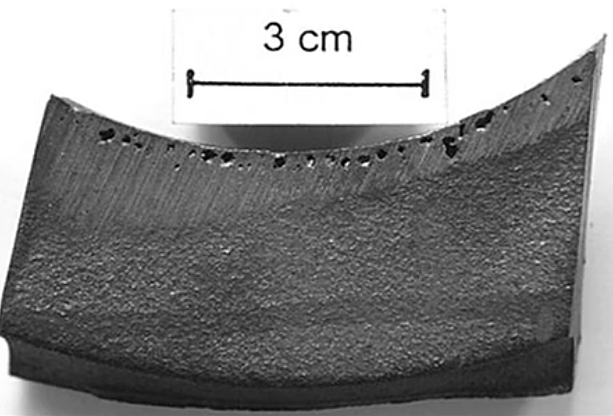
Many operators believe “more spray means safer” and apply excessive or continuous spraying. Surplus water accumulates in die parting lines, venting slots, and ejector pin clearances, then vaporizes instantly at casting temperature, causing subsurface gas porosity and pinholes, whitening and water-mark staining on the casting surface, and blistering and coating/painting failures in downstream finishing. Residual moisture or deposits can also contribute to defects that become visible during downstream finishing, so they should be checked as part of the root-cause investigation.
Mistake ③ Uneven Coating Thickness → Local Mold Temperature Variation and Distortion
Incorrect robot spray trajectories or inconsistent nozzle-to-surface distances produce non-uniform coating thickness across the cavity. Thicker coating areas insulate the die and run cooler; thinner areas lose heat faster — so local mold temperatures fluctuate high and low, causing unbalanced internal stress, bending and warpage, and recurring shrinkage defects that never seem to tune out.
Mistake ④ Release Agent Residue Build-Up → Blocked Venting System
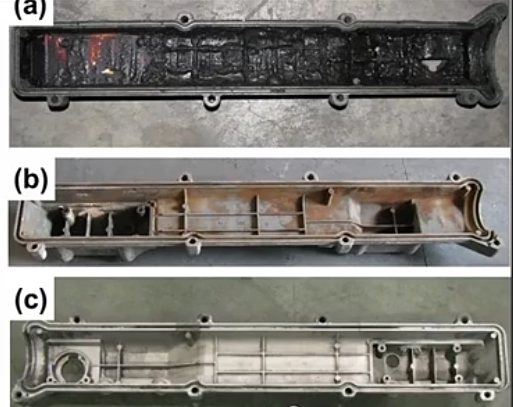
Over long production runs, release agent compounds settle and accumulate in corners and dead zones, forming thick carbonaceous deposits. These block the venting channels, trapping gas inside the cavity and leading to gas entrapment and blowholes, continuous burning (blackening) defects, and accelerated die aging as deposits adhere to the mold surface.
Mistake ⑤ Insufficient Blow-Off → Foreign Material Entrapment
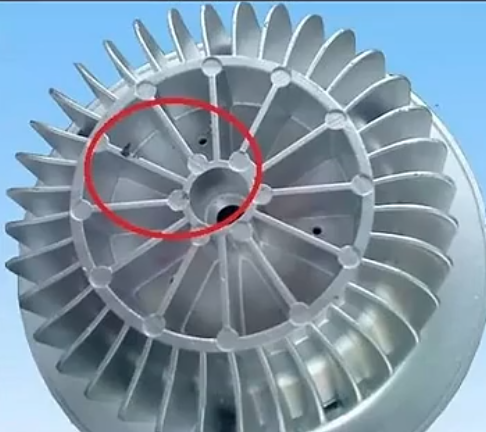
When a crew simply sweeps the mold with air for a second and closes it, residual oil sludge and chemical residue remain on the mold surface. Mixed with aluminum swarf and dust, they are sealed into the cavity, producing black spots (inclusions) on the casting surface, surface pitting / rough skin, and recurring shot-blast finish defects.
2. Physical Mechanisms Behind the Defects
If moisture from a water-based release agent remains on the die surface when it contacts hot molten metal, rapid vaporization can increase the amount of gas present and, depending on the process conditions, increase the risk of gas entrapment and subsurface porosity. Check residual moisture together with venting, ejector-pin areas, parting lines and the relevant shot conditions.
If the mold temperature is too low, spray water does not dry instantly and the film becomes non-uniform; if too high, the water boils and splashes, scattering the film. In other words, mold temperature determines the quality of the sprayed film itself. Likewise, a concentration (dilution ratio) that is too high causes residue build-up, while too low a concentration reduces release, lubrication, and insulation. Quantifying and standardizing spray pressure, nozzle distance, atomization droplet size, and spray time is the first step toward stable quality.
3. 7-Point Standardization of the Spray Process
For reproducible on-site control, manage the following seven items numerically.
| Control Item | Standardization Point | Targeted Benefit |
|---|---|---|
| Spray volume | Define spray volume per shot (flow meter / timer control) | Prevent film gaps and residual moisture |
| Concentration / dilution ratio | Fix concentrate-to-water ratio in the SOP | Suppress both residue build-up and poor lubrication |
| Mold temperature | Monitor mold temperature before/after spraying; maintain proper window | Stable film formation; prevent cold shuts and soldering |
| Nozzle conditions | Fix spray distance, pressure, and robot trajectory | Uniform film thickness; eliminate dead zones |
| Blow-off drying | Specify blow time, angle, and coverage | Complete removal of moisture, sludge, and residue |
| Periodic cleaning | Set cleaning cycles for vents, parting lines, and pin areas | Maintain venting capacity; extend die life |
| Process monitoring | First-article checks, patrol inspection, SPC record keeping | Early detection of anomalies and recurrence prevention |
Key message: As long as the shop focuses only on machine parameters (injection pressure, speed, intensification) while neglecting the fundamentals — spraying, mold temperature, and melt quality — stable yield is difficult to achieve. There is no defect without a cause in die casting; every defect corresponds to a physical principle.
Conclusion
In high-pressure die casting, optimizing the spray application process is a critical thermal management practice that balances quality with productivity. It is far more than simply applying release agents and cooling the mold—it directly influences porosity reduction, filling performance, and tooling longevity. By moving away from purely empirical adjustments and implementing quantitative thermal imaging, optimized nozzle positioning/flow rates, and precise air-blow parameters, foundries can achieve significant scrap rate reductions while shortening overall cycle times.
Frequently Asked Questions
Q1: What should be standardized first in the release agent spraying process?
A1: Start by quantifying the spray volume per shot and the dilution ratio (concentration). Quantitative control using flow meters and timers, together with standardized work procedures (SOP), delivers the greatest effect; next comes fixing mold temperature management and blow-off conditions.
Q2: Why does over-spraying cause gas defects?
A2: If moisture from a water-based release agent remains on the die surface when it contacts hot molten metal, rapid vaporization can increase gas generation and, depending on the process conditions, increase the risk of gas entrapment and subsurface porosity. Evaluate spray quantity together with die temperature, drying, venting and shot conditions.
Q3: How does mold temperature affect spray quality?
A3: If the mold temperature is too low, the spray water does not dry instantly and the film becomes uneven; if it is too high, the water boils and splashes, scattering the film. In other words, mold temperature is the variable that determines spray quality itself — film control cannot be achieved without mold temperature management before and after spraying.
Q4: How should the effect of spray-process standardization be verified?
A4: Record spray volume, concentration, die temperature, nozzle condition, blow-off, cleaning and process-monitoring data, then compare them with defect type, defect location and change history. Use the same evaluation criteria before and after a change and confirm that any improvement is repeatable in normal production. The effect size depends on the component, die, equipment, material and other casting conditions.
Related Articles: Die Casting Mold Life Extension & Maintenance Guide · High-Airtightness Defect Troubleshooting Guide · Contact Us / Free Technical Consultation